
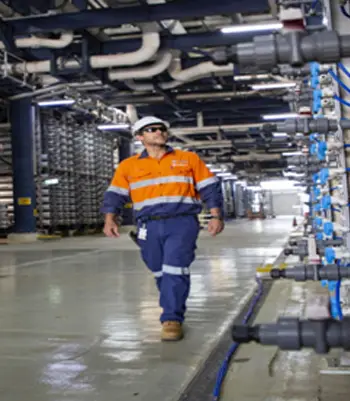
Understanding how to treat wastewater is no longer just a technical concern for treatment plants. It has become essential for any factory, hotel, tourist resort, or commercial project seeking to manage water safely and sustainably. Water used in daily activities or industrial processes does not reach the end of its journey when it enters the sewer network. Instead, a more important stage begins: How can this water be transformed from a potential source of pollution into water that can be handled safely and perhaps reused in certain applications?
In this article, we explain how wastewater is treated, the main stages it passes through inside treatment plants, and the technologies used to improve its quality. We also answer an important question: What is reverse osmosis, and can it be used in advanced treatment systems? We then explore the factors that help you choose the right system for your project.
How Is Wastewater Treated?
Wastewater treatment involves a combination of methods and stages that work together within a treatment plant, rather than relying on a single method. The treatment system varies according to the water source, the types of contaminants present, the daily wastewater volume, and the treatment objective, whether safe discharge or reuse in certain industrial or service applications.
Physical Treatment
Physical treatment is one of the first steps in wastewater purification. It aims to remove solid materials and visible impurities without using chemicals. This involves screening to remove large waste items, sedimentation to separate heavy particles, skimming to remove oils and grease, and filtration to remove some suspended solids.
This stage helps protect plant components from blockages or damage and reduces the load on subsequent treatment stages. This improves operating efficiency and prepares the water for biological or chemical treatment.
Biological Treatment
Biological wastewater treatment uses bacteria and other microorganisms to break down organic substances in wastewater, such as food residues, oils, soap, and waste generated by daily activities or certain industrial processes. This stage helps reduce the organic load in the water, which is measured using indicators such as biochemical oxygen demand (BOD) and chemical oxygen demand (COD).
Biological treatment may take place in the presence of oxygen through aerobic processes, or without oxygen through anaerobic processes, depending on the water characteristics and treatment plant design. Common technologies used at this stage include:
Sequencing Batch Reactor (SBR): An activated sludge system that treats wastewater in batches within dedicated tanks, with oxygen supplied to stimulate bacterial activity.
Moving Bed Biofilm Reactor (MBBR): A system that uses small plastic carriers on which bacteria grow inside aeration tanks, increasing the efficiency of organic matter removal.
The appropriate technology is selected according to wastewater volume, contaminant concentrations, available space, and the required treated water quality. A single standard system is therefore not used for every project; each solution is designed around specific project requirements.
Chemical Treatment
Chemical treatment is used when water requires further quality improvement or the removal of contaminants that physical and biological methods alone cannot adequately address. This stage involves adding chemicals or using oxidation processes to help reduce microorganisms and trace contaminants.
Common chemical treatment applications include chlorine or ozone disinfection, as well as coagulants and flocculants that bring small particles together so they can be more easily settled or separated from the water.
Sludge Treatment
Wastewater treatment produces sludge containing solid and organic materials separated from the water. This sludge cannot be disposed of indiscriminately. It undergoes dedicated processes such as thickening, drying, and stabilization before safe disposal or reuse in permitted applications that comply with environmental standards.
Sludge treatment is an important part of overall plant performance because it affects operating stability, odor reduction, and the environmental impact of solid waste.
Advanced Treatment
In some projects, conventional treatment is insufficient to achieve the required water quality, particularly when the goal is to reuse water in industrial or service applications requiring a higher level of purity. Advanced technologies such as ultrafiltration or reverse osmosis may then be used.
We provide complete water and industrial wastewater treatment solutions designed to meet the needs of key sectors, including food and beverages, mining, pharmaceuticals, petrochemicals, and energy. We carefully assess each project’s requirements to design effective treatment plants that integrate advanced technologies, including evaporation, filtration, clarification, and aerobic and anaerobic biological treatment, ensuring high efficiency and compliance with the highest standards.
Contact Aqua Sana today for a detailed technical assessment and a water treatment solution tailored to your project’s needs.
What Is Sewage Treatment?
Sewage treatment is the process of removing contaminants from water generated by domestic and municipal activities. This water may sometimes be mixed with limited quantities of industrial wastewater or stormwater.
The process relies on physical, chemical, and biological stages to produce treated water that can be safely discharged into the environment or reused according to the required standards.
Wastewater treatment usually begins by removing large solids through screens and barriers, followed by the removal of fats and grease before the main treatment stages. The process also produces semisolid sludge, which requires further treatment before safe disposal or use.
Why Is Wastewater Treatment Important?
The risks of wastewater extend beyond its being unsuitable for use. It can become a direct source of disease transmission and water and soil pollution. Understanding how to treat wastewater is therefore essential for protecting people and the environment and enabling safer water reuse.
The importance of wastewater treatment includes:
Protecting human health: Reducing disease-causing bacteria, viruses, and parasites.
Preserving water quality: Preventing water quality deterioration and the death of aquatic organisms.
Preventing soil contamination: Limiting the impact of untreated wastewater seeping into agricultural land.
Protecting ecological balance: Reducing pollution in water bodies and disruption to biodiversity.
Enabling safe reuse: Supporting certain industrial or agricultural uses, depending on the level of treatment.
Can Wastewater Be Reused After Treatment?
Yes, wastewater can be reused after treatment, but this depends on the treatment level, the quality of the resulting water, and the environmental requirements for each application.
Treated water may be used for landscape irrigation, certain indirect industrial uses, outdoor cleaning, or selected service applications within hotels and tourist resorts.
However, suitability for reuse cannot be determined without proper assessment. It requires water analysis, identification of contaminants, selection of the appropriate treatment level, and confirmation that the treated water meets the required specifications.
What Is Reverse Osmosis?
Simply put, reverse osmosis is an advanced water purification technology that passes water under a specified pressure through semipermeable membranes. These membranes allow water molecules to pass while helping separate dissolved salts, heavy metals, organic substances, bacteria, and microscopic contaminants.
The process produces a purified water stream and a concentrated stream containing contaminants, which is managed according to the treatment system in use.
In wastewater treatment, reverse osmosis is not usually the first stage. It is generally used as part of advanced treatment after removing solid impurities and biological contaminants that could affect membrane performance. It can be combined with other treatment units according to raw water quality, the types of contaminants present, and the intended reuse of the treated water.
How Does Reverse Osmosis Improve Treated Water Quality?
Reverse osmosis helps:
Improve treated water quality by reducing total dissolved solids.
Lower salt concentrations and remove a substantial proportion of bacteria and microscopic contaminants.
Remove certain heavy metals, such as lead and mercury.
Reverse osmosis efficiency varies between projects according to the water source, contaminant concentrations, the quality of preceding treatment stages, and the membranes used. The system must therefore be designed around a detailed water analysis to achieve the best possible water quality and operating efficiency while reducing blockages and membrane damage.
What Affects the Cost of Building a Water Treatment Plant?
The cost of building a water treatment plant varies from one project to another. It depends on more than equipment alone and is influenced by water characteristics, plant size, the required treatment level, and operating and maintenance costs.
The main factors affecting cost include:
The type of water to be treated.
The plant’s daily capacity.
The required treatment level.
The technologies used.
Operating and maintenance costs.
A water treatment plant should therefore not be selected solely on the basis of the lowest price. A technical assessment is needed to identify the most suitable system in terms of efficiency, water quality, and long-term operating costs.
Aqua Sana supports this process by assessing water characteristics and project requirements, then designing and implementing a suitable treatment solution that balances quality, cost, and operating stability.
How Does Wastewater Treatment Differ from Drinking Water Treatment?
Wastewater treatment differs from drinking water treatment in its objectives and treatment stages. Wastewater initially requires the removal of organic matter, suspended solids, sludge, and biological contaminants before it can be considered for reuse or safe discharge.
Drinking water treatment, meanwhile, focuses on removing impurities, salts, odors, and microscopic contaminants to produce water suitable for safe use.
The components of drinking water treatment plants vary according to the water source and quality. They may include sand filters, carbon filters, desalination units, disinfection systems, and, in some cases, reverse osmosis units, depending on the concentrations of salts and contaminants in the water.
Aqua Sana’s Wastewater Treatment Solutions in Egypt
When choosing a specialist water purification and treatment company in Egypt, the plant’s price alone is not enough. Project success depends on an accurate assessment, sound design, appropriate technology selection, and efficient operation and maintenance after installation.
At Aqua Sana, we provide complete wastewater treatment solutions, beginning with an assessment of water characteristics and project requirements. We then design and implement a suitable treatment system that achieves the best balance between water quality, operating costs, and long-term plant stability.
Aqua Sana’s services in this field include:
Assessing and analyzing water to identify contaminants and the required treatment level.
Designing wastewater treatment plants around each project’s characteristics rather than applying one standard system.
Selecting suitable treatment stages, whether physical, biological, chemical, or advanced.
Delivering complete solutions covering engineering, supply, installation, commissioning, operation, and maintenance.
Refurbishing and upgrading existing plants to improve efficiency and reduce operating problems.
Providing advanced technologies such as ultrafiltration and reverse osmosis when higher water quality is required.
Providing ongoing support after commissioning to maintain plant efficiency and ensure stable performance.
Aqua Sana serves multiple sectors, including factories, hotels, tourist resorts, commercial projects, and government organizations, through water treatment solutions tailored to each sector’s needs.
Understanding how to treat wastewater helps you choose a suitable treatment system that protects the environment and ensures operating efficiency. A design based on a detailed technical assessment gives your project better treated water quality and more lasting operational stability.
Contact Aqua Sana today for a technical assessment and a complete wastewater treatment solution for your project.